Savoring Uozu’s Culinary Heritage

From fresh seafood straight from Toyama Bay to hearty local delicacies and seasonal produce, discover the rich and diverse gourmet culture of Uozu City — a true food treasure in Japan’s Hokuriku region.

Red Snow Crab

Red Snow Crab

Queen of Toyama Bay: “Red Snow Crab”

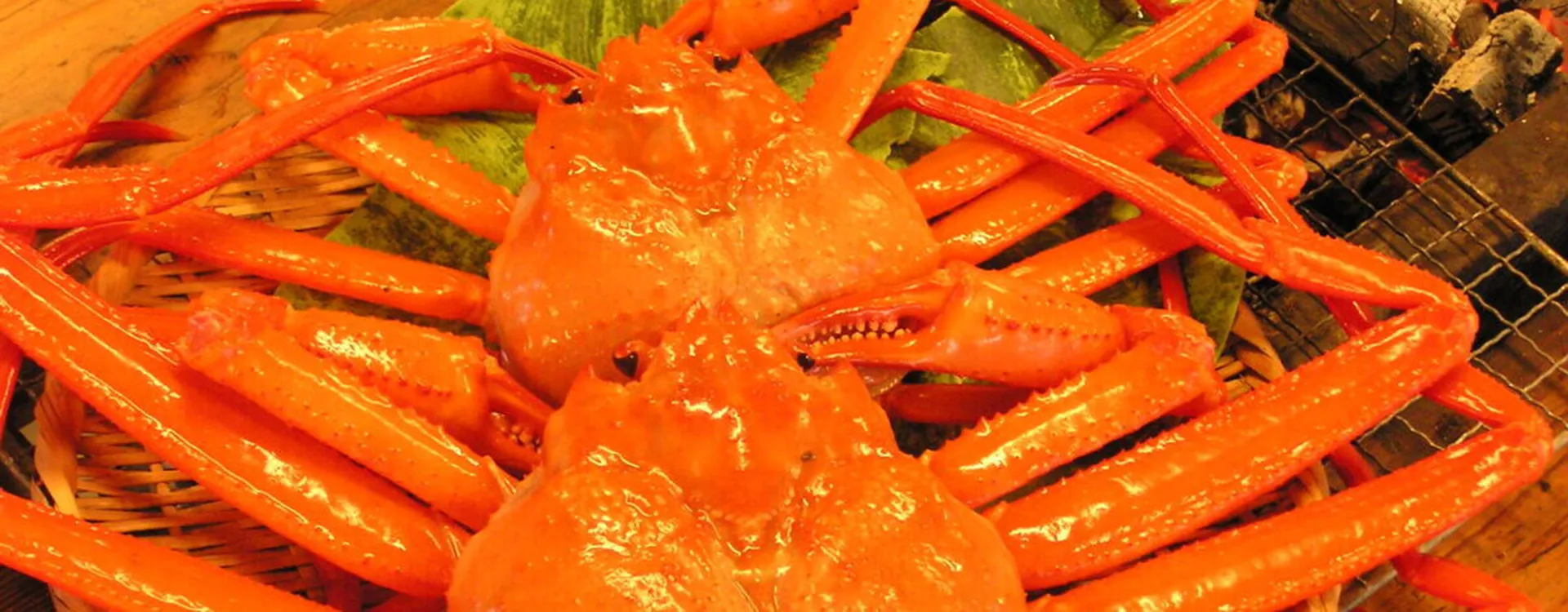
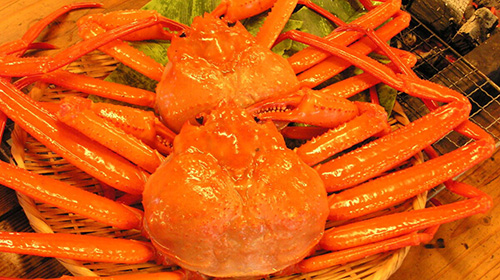
The crab pot fishing method for red snow crab now used around the world was developed and popularized in 1952 by a fisherman from Uozu City, Hamada Toramatsu. Uozu City has the largest red snow crab landings in Toyama Prefecture, and during the fishing season, exceptionally fresh crab is sold at shops throughout the city. Red snow crab is available not only at fish markets but also at events such as the Uozu Morning Market, and it is popular as a souvenir. Each year, Uozu hosts various events related to red snow crab, including “Kani Sodo”, a crab festival.
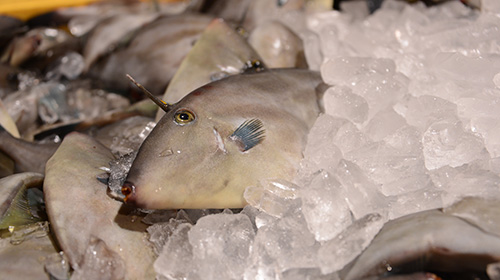
Black scraper

Black scraper

Food Signifying the Arrival of Winter in Uozu

Its Japanese name umazurahagi means “horse-faced filefish” because its elongated head resembles a horse’s face. At Uozu Port, black scrapers account for about half of the total catch. The white flesh is tender, mild, and delicately flavored, with a pleasantly springy texture and bite. The liver is rich and full of umami and is highly prized as a delicacy. At Uozu Port, large specimens measuring 25 cm or more, mainly landed around February, are branded as King Kisaragi.

Eelpout

Deep-sea Fish that Dwell in the Depths of Toyama Bay

Eelpout is a deep-sea fish that inhabits waters deeper than 200 m. It grows to approx. 20 cm in length and has a slender body with white, translucent flesh. The thick gelatinous layer covering its body is rich in collagen. The flesh has a moderate fat content, and in fishing villages it has long been used in miso soup and clear soups. In recent years, its fluffy texture when prepared as tempura or deep-fried has been highly praised, and a method of drying it and lightly grilling it has also become popular as a snack to accompany alcohol.

Firefly Squid

The Mystery of Toyama Bay: A Herald of Spring

Firefly squid are a symbol of spring in Toyama Bay, and their bluish-white bioluminescence has earned them the name “the mystery of Toyama Bay.” In Uozu, they are regarded as one of the city’s three great natural wonders and have also been selected as the official fish of Toyama Prefecture. Fishing is carried out mainly using fixed nets, with the peak season running from March to June. They are also enjoyed as food, prepared as sashimi, dressed with vinegared miso, or processed into various products. During the spawning season, a phenomenon known as “firefly squid beaching,” in which they wash ashore, can sometimes be seen, and the coastal waters of Toyama City, Namerikawa City, and Uozu City have been designated a Special Natural Monument of Japan.

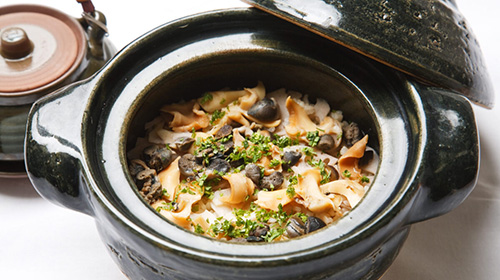
Bai-meshi (Seasoned Rice Dish Cooked with Whelks)

Bai-meshi (Seasoned Rice Dish Cooked with Whelks)

Uozu Bai-meshi: A Dish that Brings Happiness

“Bai” refers to whelk shellfish that are landed abundantly in Toyama Bay, and bai-meshi is a seasoned rice dish cooked using broth made by simmering the whelks in their shells. Originally a fishermen’s meal eaten at home as staff fare, it is one of Uozu’s local specialties. Its rich flavor, infused with the concentrated umami of the whelks, has attracted attention and has been featured on television in recent years. Today, it is served at restaurants throughout the city, where visitors can enjoy variations in flavor from one establishment to another.

Sliced Raw Fish in Kelp

Traditional Local Cuisine Packed with Flavor

In Toyama, where kelp culture is deeply rooted, sliced raw fish in kelp—a local specialty made using kelp brought from Hokkaido by Kitamaebune trading ships—has long been enjoyed as a regional dish. By wrapping raw fish in kelp, umami is transferred to the fish and its keeping quality is improved. Swordfish is commonly used, but in recent years a wide variety of ingredients such as shrimp, squid, and wild mountain vegetables have also been prepared this way. Available in many varieties for both home use and gift-giving, sliced raw fish in kelp is a representative dish of Toyama’s food culture.

Kamaboko (Boiled Fish Paste)

Kamaboko (Boiled Fish Paste)

Uozu’s Most Recommended Souvenir

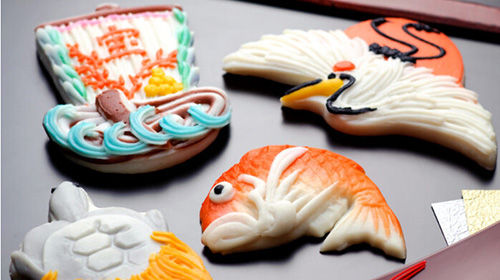
Kamaboko is a preserved food that originated as a way to keep fish edible for longer in the days before refrigeration. In Toyama, spiral-shaped kamaboko and decorative kamaboko molded into auspicious shapes such as sea bream, cranes, and turtles are especially well known and are often given as wedding gifts. In Uozu City, distinctive products such as sushi-style kamaboko and cheese stick kamaboko are available, and they are enjoyed as representative local souvenirs of Uozu.

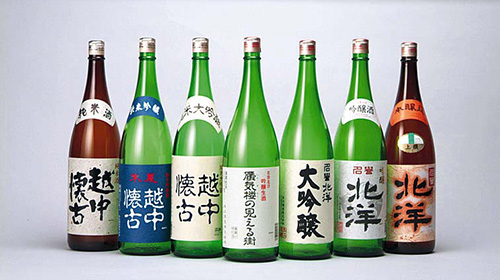
Uozu Shuzo

Uozu Shuzo

The Only Sake Brewery in Uozu

Uozu Shuzo, the only sake brewery in Uozu City, was founded in 1925. Deeply rooted in the climate and culture of Uozu, a coastal town known for mirages, the brewery uses underground water from the Katakai River system at the foot of Mt. Tateyama, Yamada Nishiki rice from Hyogo Prefecture, and Oyamanishiki, the first sake rice variety independently developed in Toyama Prefecture. Valuing sake brewing that pairs well with seafood, the brewery has grown together with the local food culture.

Apples

Apples

One of the Representative Fruits of Uozu

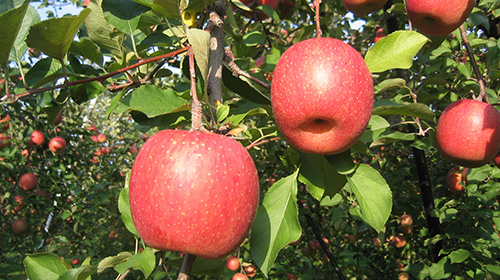
Uozu apples owe much of their delicious flavor to the area’s favorable growing conditions. Because Uozu is located further south than other apple-producing regions, the apples are able to mature on the tree for a longer period. The main variety, Fuji, is grown with full exposure to sunlight until just before harvest, resulting in strong sweetness, abundant juice, and a crisp texture. As production is limited, the apples are not widely distributed on the market, and many local orchards sell them directly on their own premises through “yard sales.”

Pears

Pears

Uozu’s Little-Known Fruit, Beloved by Those in the Know

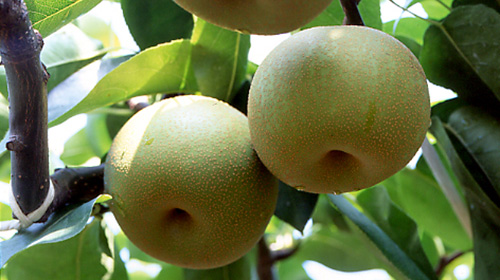
Uozu pears are known for being sold only when fully ripened, with same-day sales that highlight their rich sweetness. Although production is limited, pear cultivation in the area has a history of more than 140 years, and growers also engage in low-pesticide and organic farming practices. Some farmers cultivate old varieties rarely seen in other producing regions, which have long been cherished by dedicated fans. Sales are mainly conducted directly at farmers’ homes, where customers can enjoy conversation while making their purchases.

Grapes

Grapes

Toyama Prefecture’s Largest Production Site

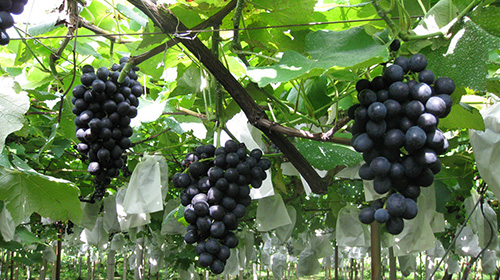
Nishifuse grapes are grown in Toyama Prefecture’s largest grape-producing area by cultivation acreage. Although overall production is not large, around 30 different varieties are cultivated, making diversity a key feature. In addition to standard varieties, growers actively work on cultivating new types, some of which can be purchased only at local direct-sales outlets. Carefully grown by local farmers, the grapes can be enjoyed at their freshest.

Wine (KANATA WINERY)

Perfect Wine for Uozu’s Food Culture

KANATA WINERY was established in Uozu City in 2022 with the concept of “a winery rooted in Japan’s umami culture and water.” Uozu City has steep terrain where the Tateyama mountain range, rising to over 2,400 m above sea level, lies only approx. 25 km from the coast at sea level, creating a unique water cycle. Making use of this “Uozu terroir”, the winery is dedicated to producing wines that pair well with local dishes such as sliced raw fish in kelp, while aiming for the day when the area will be known as “Uozu terroir.

Uozu Fish Land

Uozu Fish Land

Fresh Fish is Delivered from Here

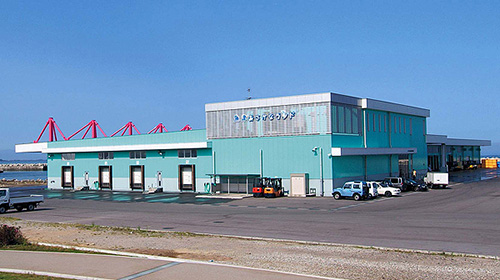
Uozu Fish Land is the nickname for a seafood handling and distribution facility operated by the Uozu Fisheries Cooperative (JF Uozu). With the aim of delivering safe and fresh seafood to consumers, the cooperative was a pioneer nationwide in developing a market equipped with advanced hygiene management. A wide variety of seafood landed at Uozu Port is carefully selected by licensed brokers and shipped to Uozu City as well as to destinations throughout Toyama Prefecture and beyond.

Uozu’s Delicious Water

Uozu’s Delicious Water

The Source of Uozu’s Water Blessings

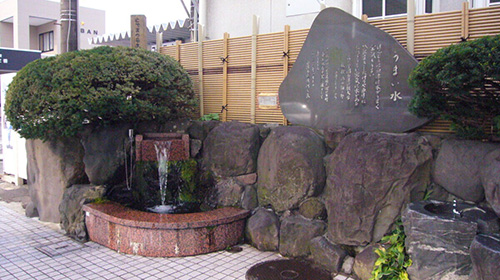
“Uozu’s delicious water” is groundwater drawn from the Katakai River basin that flows through Uozu City. Nurtured by the natural environment of the Northern Alps, it is clear, high-quality soft water, well suited for tea and rice cooking. It has received the Grand Gold Award at the Monde Selection, where its safety, quality, and taste have been highly recognized under international standards.

Miramarche

Find the Perfect Souvenir Here!

Miramarche is a shop selling local specialties and souvenirs located next to Uozu Station. It offers Uozu specialties such as bai-meshi (seasoned rice dish using whelks) and Uozu hatoshi (fried shrimp paste sandwiched between slices of bread) as well as locally-grown fruits and vegetables. The shop also has an eat-in space, making it easy to stop by and relax while waiting for a train.

Kakinoki-wari

Kakinoki-wari

The Culinary Hub of Uozu

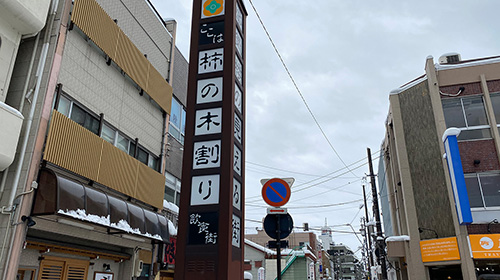
Kakinoki-wari is the nickname for the restaurant district that spreads out in front of Uozu Station on the Ainokaze Toyama Railway. This area has the highest concentration of eateries in Uozu City, with more than 200 establishments lining the streets. The number of restaurants relative to the population is said to be among the highest in Japan. With a history as a gathering place for fishermen, the area continues to support Uozu’s food culture today, offering a wide variety of dining options including izakaya (pub), Japanese, Western, Chinese, yakiniku, and bars.